
The Hamster Wheel of Modern Motherhood
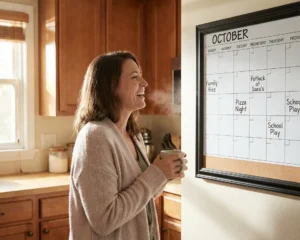
Take a look at the family calendar on the fridge. Is it a chaotic mosaic of soccer practices, piano lessons, tutoring sessions, and birthday parties? If the thought of adding one more thing makes you want to hide in the pantry with a bag of chocolate chips, you’re not alone. We’re living in an age of hyper-scheduling, where every moment of our children’s lives feels like it needs to be optimized, enriched, and documented. The pressure to do it all, and to make sure our kids are doing it all, is relentless. It’s a hamster wheel, and frankly, this mom is tired of running. If you’re feeling the same, it might be time to step off and join a quiet but powerful rebellion the lower scheduling parenting revolution.
What is the “Lower Scheduling” Revolution?
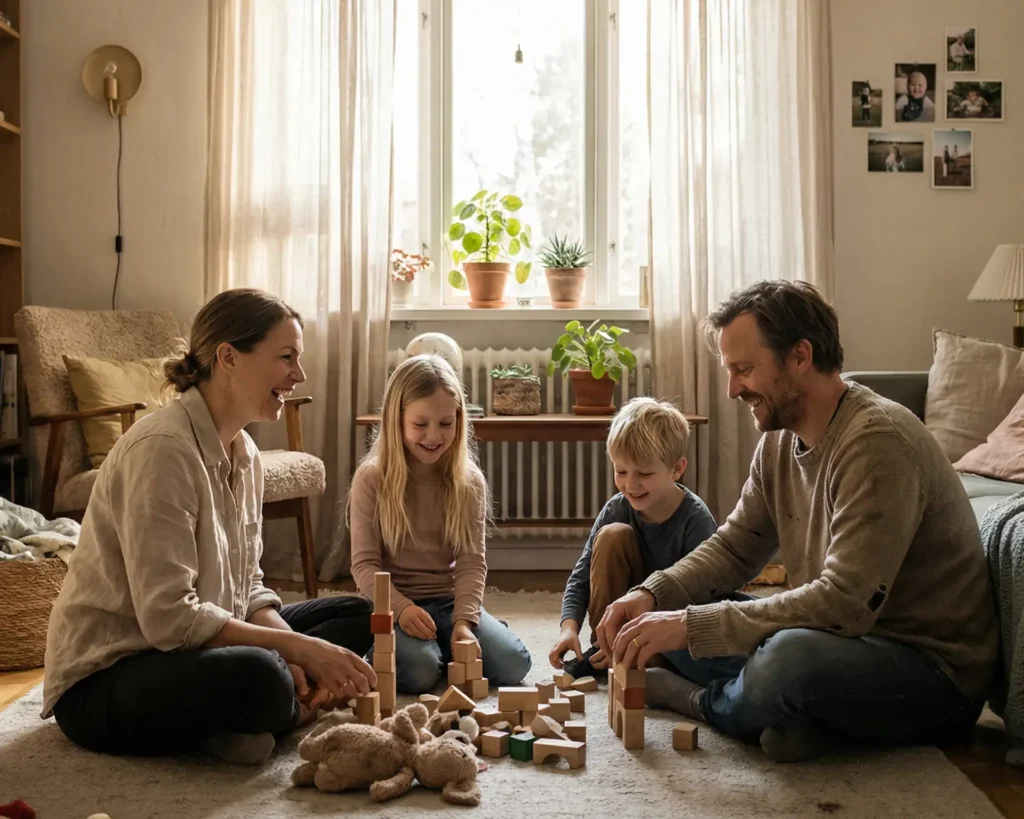
The idea of “lower scheduling,” sometimes called “slow parenting,” is a conscious and deliberate choice to do less. It’s a direct response to the achievement-oriented culture that has dominated parenting for the last two decades. It’s not about neglect or letting your kids run wild; it’s about giving them back the one thing they’ve lost in our frantic modern world unstructured time. As parents everywhere recalibrate what childhood should actually look like, this approach offers something refreshing a way to raise resilient, emotionally intelligent kids without burning ourselves out in the process. It’s about trading the frantic pace of overscheduling for the calm and connection of a simpler, more present family life. As one recent article put it, it’s the art of doing less.
The Surprising Science Behind Boredom
Our instinct as parents is to solve the “I’m bored” problem the second we hear it. We offer suggestions, turn on a screen, or pull out a new toy. But what if the best thing we could do for our children is to let them be bored? Research shows that unstructured time is when the real magic of childhood happens.
Fueling Creativity and Problem-Solving
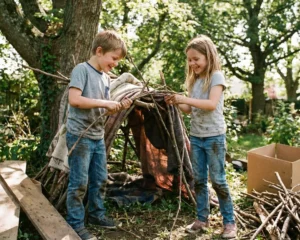
When kids aren’t being shuttled from one adult-directed activity to another, they are forced to rely on their own inner resources. They build forts out of couch cushions, create elaborate imaginary worlds in the backyard, and turn a simple cardboard box into a spaceship. This is where creativity is born. They learn to negotiate with siblings, invent games with their own rules, and figure things out for themselves, building essential problem-solving skills that no structured class can teach.
Building Emotional Resilience
Boredom can be uncomfortable, and learning to sit with that discomfort is a critical life skill. When we don’t immediately rush in to rescue our kids from boredom, they learn to manage their own emotions and find ways to entertain themselves. They discover that they are capable of creating their own happiness, which is a powerful lesson in self-reliance and emotional resilience. It teaches them that they don’t need constant external stimulation to be content.
Developing Intrinsic Motivation
Dr. Peter Gray, a research professor at Boston College who has spent decades studying the importance of play, has found that free, unstructured play is essential for developing what psychologists call “intrinsic motivation” the ability to find purpose and joy in activities without the need for external rewards. When a child builds a Lego masterpiece for the sheer joy of it, not for a grade or a trophy, they are developing a love of learning and creating that will last a lifetime. This is the kind of motivation that fuels true passion and success in the long run.
How to Embrace Lower Scheduling (Without Guilt)
The idea of doing less can feel radical, and even a little scary. But you don’t have to clear the entire calendar overnight. Here are a few practical steps to get started.
Start with a “Time Audit”
Take an honest look at your family’s schedule. Where is your time really going? You might be surprised at how many “enriching” activities are actually just adding stress. Identify one or two things you can cut back on to create more breathing room. Maybe it’s one less after-school club or simply protecting one afternoon a week for unscheduled time at home.
The “One Activity Per Season” Rule
This is a simple but powerful rule to prevent overscheduling. Allow your child to choose one main extracurricular activity per season. If your daughter wants to do ballet, great. But that’s the commitment for the fall. Not ballet plus gymnastics plus coding club. This teaches them commitment while also preserving precious unstructured time.
Create a “Boredom Buster” Jar
This is a fun, analog tool to help your kids transition to a lower-scheduled life. Write down a bunch of simple, screen-free activity ideas on slips of paper and put them in a jar. Things like “build a fort,” “draw a family portrait,” “have a dance party,” or “write a story.” The next time you hear “I’m bored,” they can pull an idea from the jar. It empowers them to find their own fun, and it takes the pressure off you to be the constant entertainment director.
“I’m Bored!” And Other Common Hurdles
The transition to a lower-scheduled life isn’t always smooth. Here’s how to handle some of the common bumps in the road.
Handling the Whining
When your child, accustomed to constant stimulation, complains of being bored, resist the urge to solve it for them. Instead, validate their feeling and empower them. Try saying something like, “It sounds like you need to figure out what to do with yourself. I can’t wait to see what you come up with!” It sends the message that you trust them to be resourceful.
Dealing with Peer Pressure (and FOMO)
It can be tough when it feels like every other kid is in a dozen activities. Remind yourself that you are making a conscious choice for your family’s well-being. The benefits of a calmer, more connected family life far outweigh the perceived benefits of keeping up with the Joneses. Your child’s mental health is more important than their resume at age eight.
What About School and College Apps?

Many parents worry that if their kids aren’t in every possible activity, they’ll be at a disadvantage later on. But the truth is, many colleges are now explicitly stating that they value depth over breadth. They would rather see a sustained passion for one or two things than a long list of activities that a student barely scratched the surface of. A childhood filled with free play and exploration actually builds the kind of creative, independent thinkers that colleges are looking for.
Your Coffee Break is Now a Rebellion
In a culture that glorifies being busy, choosing to slow down is a radical act. And for a mom, that quiet moment with a cup of coffee isn’t just a break; it’s a rebellion. It’s a declaration that your peace of mind matters. It’s a commitment to being present, not just productive. Embracing lower scheduling isn’t just about giving your kids a better childhood; it’s about giving yourself a better motherhood. It’s about reclaiming your time, your energy, and your sanity. So go ahead, pour that second cup. You’re not just drinking coffee; you’re fueling a revolution.